


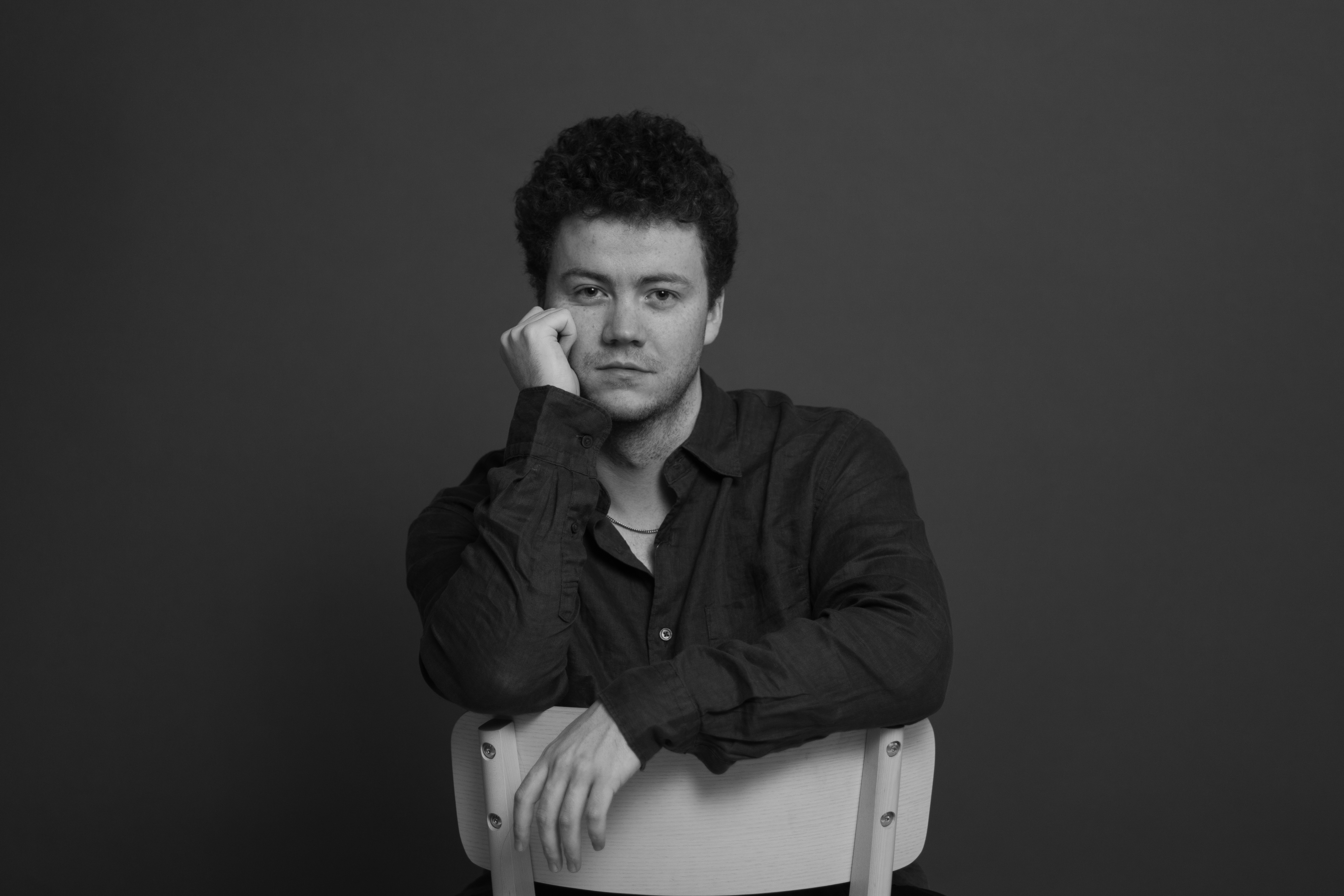
We sat down with screenwriter Paul Ingoldsby to talk research, challenges, and real-life stakes in bringing true stories to life onscreen.
Thanks for sitting down with us today, Paul. Your reputation for crafting compelling screenplays based on true events has really taken off. What draws you to real-life stories?
Thanks for having me. I think I’ve always been fascinated by the emotional weight that comes with a true story. There’s something inherently dramatic about real people facing impossible odds, or making life-altering decisions.
But it wasn’t until I worked on The Vanishing Triangle, a miniseries about real disappearances of Irish and American women in the 1990s Ireland, that I realized that these were the kinds of stories I wanted to tell. I think when an audience knows that what they’re watching actually happened, it adds a layer of meaning that’s hard to find in fiction. The best true stories remind us how extraordinary life can be.
How do you decide which true story is right for adaptation?
To an extent, it’s intuitive. A story has to really speak to me. If I can’t stop thinking about it, then I know there’s something there. Usually these are stories with some degree of moral complexity. I’m less interested in heroes versus villains than flawed people making tough choices.
For example, I was instantly drawn to the true story of a feared Irish IRA spy catcher who himself was an undercover spy for the British in the 1980s. His entire life was spent with a foot on both sides of a deeply divided society, making morally gray choices, all while knowing that a single mistake would get him killed.
But then there’s the issue of relevance: does this story say something about the world we live in today? If you don’t have that, you have an anecdote, not a movie idea. On that project, I realized that its themes of division, paranoia, and eventual healing were important for contemporary audiences to hear. Only then did I decide to dive in and write what would become Trouble.
What’s the research process like for you on a project like that?
Pretty extensive. I try to consume everything I can on the subject – books, articles, interviews, podcasts, sometimes even old social media posts from the people involved, anything I can get my hands on. That means that when it comes to putting words on the page, I have as much raw material to work with as possible. Even the smallest detail you uncover in research can become the core of a pivotal scene.
What’s the hardest part of adapting a true story?
For me, it’s deciding what to leave out. Because my research process is so exhaustive, I end up with more information than I could ever hope to include. My job is extracting meaning from the messiness of real life, and that requires a fair amount of compression and omission, while still honoring the truth.
There’s always debate about what’s “true” in film. How do you navigate that gray area?
Yeah, it’s something I think about a lot. I’d say it partly comes down to intention. Are you bending facts to make a scene more emotionally truthful, or are you making something up to manipulate the audience? To me, there’s a huge difference. I’ll change names, merge characters, shift timelines, but only in service of an emotional truth. I avoid inventing events wholesale purely for entertainment’s sake. Because at some point, it’s no longer a true story, it’s something else.
At the end of the day, adaptation is an act of translation. And as with any kind of translating, copying the source material word for word is usually the worst way to go about it. You get something much more faithful to the original if you focus more on capturing its broader truth in the way best suited to your medium. And that’s what I try to do.
How do you handle pacing in a real-life story, where climaxes don’t always come where you want them to?
It depends. Some stories are trickier than others. Real life rarely gives you a tidy midpoint, or a neat resolution, you know? So I usually focus on emotional turning points. Where does the character change? Where does the cost become clear? For example, in Analytica, there was a clear turning point where the real person made a life-altering decision. From there, it was a question of working backwards, and uncovering all the micro-choices that led up to that pivotal moment.
But there’s only so much massaging of the truth you can do. My feeling is always that if there
isn’t a seed of a climax inherent to the story, for example, it’s not meant to be a movie.
Do you feel a sense of responsibility to the people involved in your work?
Definitely. You’re dramatizing the most pivotal moments of a person’s life, and I don’t take that responsibility lightly. I have no interest in being exploitative. At the same time, I’m not here to write the Wikipedia version of someone’s story either, you know? I have just as much responsibility, if not more, to my audience. I’m here to find meaning and tell it in an entertaining way for them. So I walk that line carefully.
It’s a cliché, but everyone really is the hero of their own story. And at some point, you have to make decisions on whose version of the truth you’re portraying, and whose version takes more of a back seat. You can’t please everyone, and I try to remember that.
What’s your advice to aspiring screenwriters who want to work with true stories?
Unless you’ve led an extraordinary life, don’t automatically jump into writing something biographical. A lot of aspiring screenwriters hear “write what you know” and think the world needs another coming of age story about a young person who learns to pursue their love of writing, but I promise it doesn’t.
You’re better off finding a story that fascinates you, and figuring out why. What makes it interesting? What does it reveal about ourselves, or the society we’ve created? Why is it important to share? That “why” should guide the writing of your movie.
I’d also say that it’s okay for it not to work at first. If the true events you’ve chosen just won’t fit onto the screen, don’t be afraid to change course. Some of my projects, including Leech which was just optioned, started life as a true story before evolving into something entirely fictionalized. Sometimes, it’s okay to follow the needs of the story you want to tell, wherever they lead you.
Final question—what true story are you dying to tell next?
There’s a story I’ve been obsessed with for a long time, about the people behind what I consider to be the most consequential app of the last 15 years. I can’t say what it is. But it’s got everything I could ask for in a true story, and I’m very excited to share it with the world.
We’ll be watching. Thanks so much, Paul. It’s been a pleasure.
Thanks!
