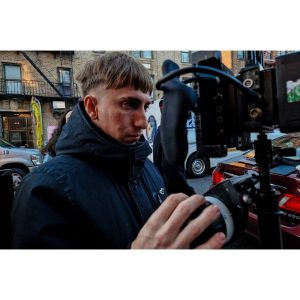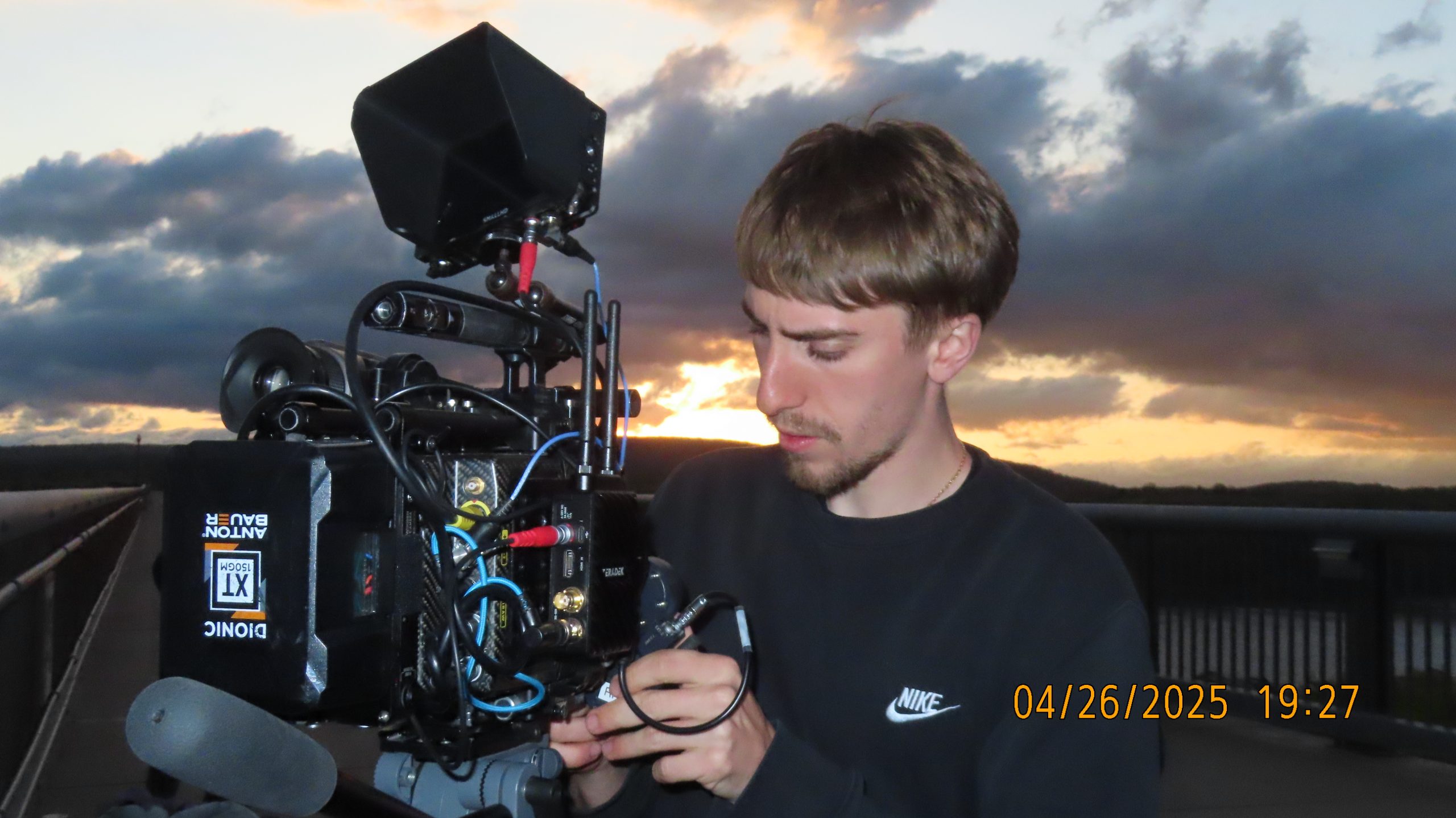
French-born Assistant Camera Hippolyte Charlut has quickly become one of the busiest focus pullers in New York City, contributing to more than 50 productions across 2024–2025. Specialising in narrative films, commercials, and music videos, he brings precision, calm, and a strong collaborative spirit to every set. We caught up with him to discuss his craft and his work on several standout projects.
- What first brought you into the world of camera assisting, and how did that path lead you to New York?
A: I’ve always been captivated by the art of visual storytelling, but what truly drew me to camera assisting was the unique blend of technical skill and creative problem-solving it demands. I spent three years studying cinematography in Paris before relocating to New York for an additional year of film school. That experience was a pivotal moment in my journey.
Moving to New York pushed me beyond my comfort zone immersing me in new teams, unfamiliar workflows, and a vibrant culture. I quickly fell in love with the fast-paced production environment here. At just 21, I left France, and since then, the projects I’ve worked on, the opportunities that have come my way, and the incredible people I’ve met have all reinforced my belief that this is the place where I am meant to thrive and grow in my career.
2. You’ve worked on more than 50 productions in just two years. What do you think defines your approach as a 1st AC?
A: What truly defines me is my commitment to precision and consistency. My primary goal is to ensure that the cinematographer can concentrate fully on capturing the perfect image, confident that the camera department is operating seamlessly. I place great emphasis on thorough preparation, clear communication, and proactively identifying potential issues before they escalate into problems. I strive to be the calm and organized anchor on set, someone the director of photography and the director can depend on, regardless of how hectic things may get. Above all, I aim to foster a positive and collaborative atmosphere. Film sets can be intense, and the energy I bring plays a significant role in shaping the environment.
3. Let’s talk about a few recent projects. Speed Kills, directed by Antony Muse, has a very sharp and dynamic visual style. How was your experience on that set?
A: Shooting Speed Kills was an exhilarating experience that truly pushed our limits. We filmed in the beautiful landscapes of upstate New York alongside the talented DP Félix Bailly, tackling the ambitious challenge of creating six music videos in just three days. The nights were chilly, the pace was relentless, and our schedule was packed, yet the team managed to keep everything running smoothly. Even with the high intensity, the vibe was fantastic. Everyone was dedicated, focused, and there for one another, which fostered a powerful creative energy. This project was a wonderful reminder of why we’re passionate about what we do.
4. You also served as 1st AC on Goldbrick with director Liam Weil. What stood out about that shoot?
A: Goldbrick had a unique charm, it felt much more down-to-earth and personal. The script was strong, the narrative was thoughtfully crafted, and the entire experience turned out to be truly enjoyable. What made it even more meaningful was the fact that I was collaborating with friends, which created a laid-back and cooperative vibe. Often, it’s the simplest sets that foster the deepest connection to the art of filmmaking.
5. Bubbling Over, directed by Louric Rankine, has been getting attention for its strong atmosphere. What was your role in shaping that look?
A: “Bubbling Over” embraced a captivating atmosphere, characterized by its subtle movements and distinct tone. My primary responsibility was to maintain a consistent sharpness and to enhance the Director of Photography’s vision through precise and dependable focus work. The set radiated a fantastic energy, the subject was compelling, the team exhibited remarkable talent, and it was one of those shoots where everything seemed to come together perfectly in terms of visuals.
6: As a camera assistant, what do you think is the most overlooked part of the craft that actually makes a huge difference on set?
As a camera assistant, I’ve come to realize that one of the most underrated aspects of our craft is the art of anticipation. While many people tend to concentrate on the technical elements, like pulling focus, managing equipment, and ensuring everything runs smoothly the real game-changer on set is the ability to foresee what’s about to happen.
For me, anticipation involves grasping the director of photography’s vision, understanding the director’s style, and being attuned to the scene’s progression. This way, I can set the camera team up for success before the next shot unfolds. It encompasses everything from having the appropriate lens at the ready to adjusting marks proactively, and even troubleshooting potential issues before they can disrupt the flow of the day. Much of this behind-the-scenes work often goes unnoticed. When it’s executed well, everything just clicks into place. The actors remain immersed in their performances, the DP can concentrate on capturing the perfect shot, and the director maintains the scene’s rhythm. It may be subtle, but it’s absolutely vital. I believe this is what truly distinguishes a great camera assistant being one step ahead, ensuring that the entire crew operates in harmony.
7. Finally, Manhattan Cowboy with Killian Couëffé—what was unique about that production?
A: Manhattan Cowboy began as a student project, but what truly set it apart was the exceptional professionalism contributed by our producer, Arthur Dupuis. His extensive experience on American film sets significantly enhanced the production quality and provided invaluable lessons for all of us involved. We filmed in various locations across New York, which gave me the chance to explore parts of the city and state I had never encountered before. Coupled with a compelling script, a talented team from school, and a wonderfully collaborative environment, this project became a pivotal experience that inspired me to remain in the U.S. and continue developing my career here.
8. What’s next for you?
A: I’m eager to keep expanding my horizons, taking on more projects, diving into ambitious work, and collaborating with fresh directors and cinematographers. For me, 2026 is all about pushing my limits, connecting with new people, and evolving in my role as a camera assistant. I’m driven to keep moving forward and contribute to stories that truly resonate.