


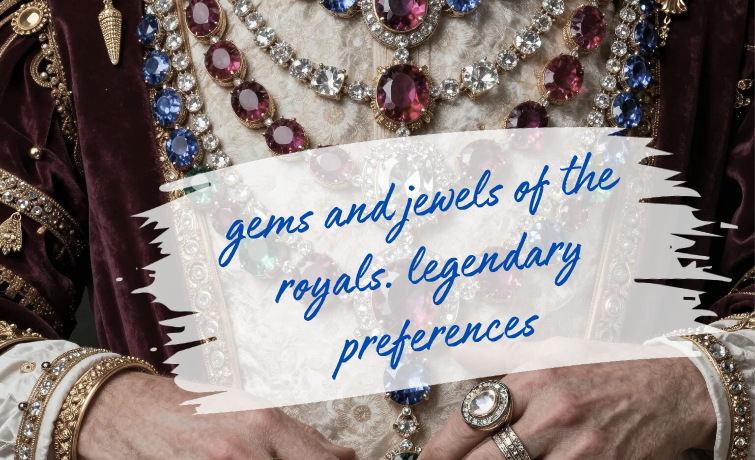
Across centuries, royal jewelry worn by men served purposes far beyond adornment. It was a visual language of authority, legitimacy, divine favor, and immense wealth. Kings, emperors, sultans, and maharajas used gemstones not merely for their beauty but for what they symbolized—power made tangible through rarity, origin, and scale. Advisors to royalty understood this well, and they were meticulous not only in selecting the finest gemstones but also in insisting on stones from origins that had already acquired legendary reputations. Over time, these preferences shaped global demand and elevated certain mines into near-mythical status.
Prized Natural Creations
Among the most prized were Golconda diamonds, Burmese rubies, Ceylonese and Kashmiri sapphires, and Colombian emeralds. These stones were incorporated into rings, turban ornaments, elaborate necklaces, gem-studded waistbands, ceremonial daggers, and opulent crowns. Men of royalty wore these jewels as daily affirmations of supremacy and as heirlooms intended to outlast dynasties.
Golconda Diamonds and the Nizams of Hyderabad
Few gemstone origins command the reverence of Golconda. Diamonds from these historic Indian mines were famed for their exceptional clarity, limpid transparency, and absence of nitrogen, characteristics rarely replicated elsewhere. Centuries ago, Golconda diamonds were considered the pinnacle of diamond perfection, and no royal treasury was complete without them.
The Nizams of Hyderabad, among the wealthiest rulers in recorded history, amassed extraordinary collections of Golconda diamonds alongside Burmese rubies, spinels, and Colombian emeralds. Turban ornaments centered with fine Golconda diamonds were a signature of Nizam regalia, worn during ceremonial occasions and court appearances. Historic records indicate that the Nizam’s, gave primary importance to the quality of gems and diamonds that they added to their treasury. This can be seen in the astounding color diamonds with a Golconda origin, that were encrusted in exquisitely crafted and extravagantly studded turban ornaments. Quite a few of these diamonds had a modest size, far from being chunky and huge. No mistake however that, these ornaments were not subtle—they were declarations of unmatched authority.
Historical narratives recount astonishing practices attributed to the Nizams, including the stitching of rough Golconda diamonds into shoes for safekeeping during times of political uncertainty. While such stories may sound extravagant, they underscore the sheer abundance of wealth and the trust placed in the intrinsic value of these stones.
In more recent gemstone circles, the Seraphim Blue Diamond, a fancy blue diamond reportedly from the Golconda mines, has attracted intense speculation. According to online sources and trade gossip, this diamond was once set in a lavish turban ornament worn by the first Nizam of Hyderabad. Although it has never been publicly auctioned or displayed, its rumored provenance continues to fuel fascination. Similarly, mention has been made of another Nizam turban ornament featuring a rare pink Golconda diamond—an extraordinary claim, given the extreme rarity of pink diamonds from that region.
Mughal Jewelry and the Flamboyant Round Diamond
The Mughal emperors were among the most lavish patrons of gemstone jewelry worn by men. Rings, armbands, necklaces, and turban ornaments were often centered with monumental stones. The Mughal aesthetic favored bold scale combined with refined craftsmanship, allowing gemstones to dominate visually while intricate goldwork provided structural elegance.
Within this context, gemstone circles have whispered about a “Flamboyant Round Diamond,” believed to have been a massive 150+ carat round white Golconda diamond, once worn in a flamboyant gold ring by Mughal royalty. No official records or museum documentation confirm its existence, and no historical name is associated with the stone. European traders reportedly coined the informal name decades later.
When rumors surfaced suggesting the diamond was of only “average” quality, interest diminished rapidly. The final whispers claimed that the stone had been cut into multiple smaller diamonds, effectively erasing its identity. Whether factual or embellished, this narrative reflects a recurring theme in royal gemstone history: monumental stones disappearing through recutting, private sales, or deliberate anonymity.
Kashmir Sapphires and the Maharajas of Kashmir
Kashmir sapphires occupy a unique position in gem lore. Mined for a brief period in the late 19th and early 20th centuries, these sapphires are celebrated for their velvety, cornflower-blue color, caused by microscopic inclusions that scatter light in a way unmatched by other origins.
The Maharajas of Kashmir, ruling during the peak of these mines, naturally incorporated these sapphires into their treasuries. Men’s jewellery from this era included sapphire-set rings, turban ornaments, and ceremonial necklaces. Given the extremely limited output of the Kashmir mines, stones with direct royal provenance are now among the rarest and most coveted sapphires in existence.
Among the famed examples, the Zanskar Crown Sapphire is admired for its rich, evenly distributed color and classic Kashmir softness, symbolizing the geological and regal mystique associated with the region. This big cushion cut Kashmir sapphire, was apparently once worn by Maharaja Pratap Singh of Kashmir, in a scintillating necklace.
The Spirit of Kashmir Sapphire is another celebrated stone, valued not only for its exceptional color and texture but also for embodying the romance and near-mythical status of true Kashmir origin. This Kashmir blue sapphire has a mention in the Guinness Book Of World Records, as the biggest known Kashmir sapphire. While more information on the Zanskar Crown Sapphire is awaited, gemstone circles debate the possibility of this sapphire, dethroning the Spirit Of Kashmir Sapphire in terms of size.
Other well-known Kashmir sapphires include historic stones once held in royal and aristocratic collections, as well as museum-held examples such as the Kashmir sapphires in the Natural History Museum London and the Smithsonian Institution.
Burmese Rubies and Southeast Asian Courts
Rubies from Burma, particularly from the Mogok region, were revered for their saturated red color and inner glow. Southeast Asian royalty, as well as Indian maharajas, prized these stones for their association with vitality, protection, and divine power. Men wore Burmese rubies in rings, sword hilts, and waist ornaments, often believing the stones could safeguard the wearer in battle.
The preference for Burmese rubies elevated Mogok to global prominence, and even today, rubies with confirmed royal provenance from this region command extraordinary premiums.
Throughout history, several famed Burmese rubies have achieved legendary status due to their size, color, and provenance. One of the most celebrated is the Sunrise Ruby, a 25.59 carat pigeon blood ruby of Burmese origin, which set a world auction record when it was sold in 2015, symbolizing the enduring supremacy of Mogok rubies. Another historic example is the Edwardes Ruby, a 167 carat Burmese cabochon ruby now housed in the British Museum of Natural History, admired for its exceptional color and remarkable scale. The Rosser Reeves Star Ruby is also of Burmese origin and is preserved at the Smithsonian Institution. Additionally, the DeLong Star Ruby, once among the largest known star rubies, further enhanced the global reputation of Burmese rubies.
Colombian Emeralds and Imperial Splendor
Emeralds from Colombia, with their lush green colour and characteristic jardin inclusions, were another cornerstone of royal men’s jewellery. Mughal emperors, in particular, were known to favour emeralds engraved with Quranic verses or imperial seals. These stones were worn as talismans as much as ornaments.
European royalty also prized Colombian emeralds, incorporating them into crowns, brooches, and ceremonial regalia for men. Stones passing through royal hands often acquired layered histories, moving from one empire to another through conquest, diplomacy, or marriage.
Among the most famed Colombian emeralds, is the Gachalá Emerald, discovered in 1967 in Colombia. It is considered to be one of the finest emerald crystals ever found and is now housed at the Smithsonian Institution. Another celebrated emerald from Colombia is the Mogul Mughal Emerald, a big emerald engraved with Islamic prayers and floral motifs, believed to have been owned by Mughal emperors. The Duke of Devonshire Emerald, is a superb cut emerald and exemplifies the elegance achieved when Colombian rough is fashioned by master cutters.
European Royal Diamonds and Historic Rings
In Europe, men of royalty wore diamonds prominently in rings and insignia. The Hope Diamond, though more famously associated with later owners, is believed to have originated in Golconda and passed through the hands of French royalty. The Regent Diamond, once set in the crown of Louis XV, was worn in ceremonial contexts by male monarchs and symbolised absolute power.
Similarly, the Koh-i-Noor, another Golconda diamond, was worn by various rulers across India and Persia before entering British royal collections. Its association with male rulers across empires reinforces the central role diamonds played in projecting authority.
A common narrative in multiple online sources is that, the Seraphim Blue Diamond was handed over to the French in return for military support. The transaction occurred during the reign of Asaf Jah II, the second Nizam of Hyderabad.
Rarity, Speculation, and Modern Secrecy
As centuries pass, precious stones with documented royal provenance grow rarer. Many remain untraced, their current locations unknown. Speculation abounds regarding their existence, authenticity, and value. In recent decades, a discernible trend has emerged: owners of such high-value assets increasingly prefer private transactions. Unlike earlier eras, where public display reinforced power, modern owners often avoid auctions and media attention, prioritising discretion and security.
This secrecy adds another layer to the mystique. Stories like the Seraphim Blue Diamond or the Flamboyant Round Diamond persist precisely because they exist in the space between history and rumour. Whether fully verifiable or not, they reflect a timeless truth—royal gemstones are not merely objects of beauty. They are vessels of history, power, ambition, and human fascination.
In the end, royal jewellery worn by men stands as a testament to how gemstones shaped, and were shaped by, the ambitions of empires. Each stone carries not only geological rarity but also the weight of centuries, making them among the most compelling artefacts of human civilisation.
